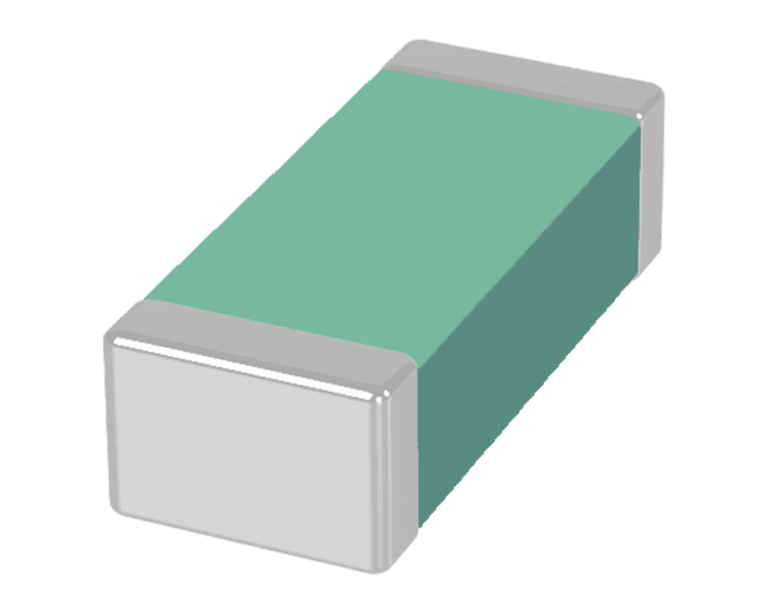


| Product Type | |
|---|---|
| Dielectric | NP0 |
| Capacitance Value | 0.1pF - 470nF |
| Tolerance | ±0.5% if > 10pF and ±0.05pF if < 10pF, ±0.1pF, ±0.25pF, ±0.5pF, ±0.1%, ±1%, ±2%, ±5%, ±10% |
| Voltage Rating | |
| Termination / Connection | Nickel Gold, Palladium-Silver, Solderable Silver, Nickel Tin, Dipped SAC, Dipped SnPb, Electrolytic SnPb |
| Packaging | Bulk, Tape & Reel |
| Temperature Coefficient |
Get help specifying or customising the right product for your application.
Working alongside your design team from the earliest stage, we help you select the right part for the application and, where a standard part will not do, develop customised components with our manufacturing partners such as lead length, termination and package size.



SRT Microcéramique publishes three typical uses for the SMD High Temperature Class I range: timing, precision circuitry and filtering in high-temperature environments. The series sits within SRT’s space and medical high-temperature category. It is a temperature-compensating Class I ceramic, chosen where the value has to stay put rather than where a large value has to fit into a small case, which is the distinction that decides whether this part or the Class II equivalent belongs in your circuit.
The range operates from −55°C to +250°C, and the ceiling is set by the termination you specify. Palladium-silver, nickel gold and solderable silver terminations are published for use up to 250°C. Nickel tin, dipped SnPb, dipped SAC and electrolytic SnPb terminations are published for use up to 200°C. This is a selection decision rather than a packaging detail, because it fixes both the temperature you can design to and the attachment method your assembly has to use, and our technical sales team will advise on it against your process.
The temperature coefficient is ±30ppm with 0Vdc applied, and the dielectric is an ultra-stable temperature-compensating Class I ceramic. Dissipation factor is 1×10⁻³ or better, measured at 1Vrms and 1MHz for values up to 1000pF and at 1kHz above that. Insulation resistance is specified at three points across the range: 10⁵ MΩ at 25°C, 10⁴ MΩ at 200°C and 5×10³ MΩ at 250°C, or 1000, 100 and 50 ohm-farads respectively, whichever is the lower figure. Those three figures matter more than the headline temperature, because they describe what the part still does at temperature rather than merely that it survives.
| Class I, NP0 | Class II, X7R | |
|---|---|---|
| Dielectric code | A | Y |
| Published temperature band | 200°C to 250°C | 150°C to 250°C |
| Operating temperature | −55°C to +250°C | −55°C to +250°C |
| Temperature coefficient | ±30ppm with 0Vdc applied | ±15% with 0Vdc applied from −55°C to 125°C, chart above that |
| Dissipation factor | 1×10⁻³ or better | 2.5% or better at 1kHz for 100pF and above |
| Case sizes | 0402 to 6660 | 0603, 0805, 1206, 1210, 1812 and 2220 |
| Tolerances | ±0.05pF to ±10% | ±5%, ±10% and ±20% |
Both ranges reach 250°C, so temperature alone will not choose between them. Class I holds its value to ±30ppm where Class II moves by ±15%, and its losses are lower by more than two orders of magnitude, which is why Class I suits timing, filtering and precision analogue work. Where a larger capacitance in the same case is the requirement, the SMD High Temperature Class II series is the alternative.
Capacitance values start at 0.1pF, with voltage ratings from 10V to 2000V, across case sizes from 0402 to 6660: 0402, 0504, 0603, 0805, 1111, 1206, 1210, 1808, 1812, 1825, 2220, 2225, 2525, 2825, 3033, 3640, 4040, 5440 and 6660. Maximum capacitance depends on case size and voltage together, so the selection table gives the ceiling for each combination. Tolerances are published as ±0.5% above 10pF and ±0.05pF below it, then ±0.1pF, ±0.25pF and ±0.5pF, with percentage options of ±0.1%, ±1%, ±2%, ±5% and ±10%.
SRT publishes the tin termination as the RoHS option and SnPb as the non-RoHS option, both rated to 200°C. Tin-lead is retained deliberately, because it remains the more robust choice in assemblies that run hot.
Custom voltages, package sizes and capacitance values are available on request, so a value the standard range does not carry is still specifiable. A 168 hour burn-in at 125°C is a published ordering option, and BME, reliability and sorting specifications can be built into the part number, alongside SRT’s own burn-in testing, precision sorting, tape-in and termination change services. SRT publishes short lead times, custom design and no obsolescence as characteristics of the range, which matters when a part is being designed into a platform with a long service life. Rhopoint Components supplies the series as an authorised SRT Microcéramique distributor, with full traceability back to the manufacturer.
Contact our technical sales team to discuss the temperature, termination and screening requirements for your application, or to request a sample against your specification.
The range operates from −55°C to +250°C, and the ceiling depends on the termination. Palladium-silver, nickel gold and solderable silver are published to 250°C; nickel tin, dipped SnPb, dipped SAC and electrolytic SnPb are published to 200°C.
Both reach 250°C, so the choice is about stability. Class I holds ±30ppm with 0Vdc applied and a dissipation factor of 1×10⁻³ or better, which suits timing, filtering and precision analogue circuits. Class II moves by ±15% and has a dissipation factor of 2.5%, and it offers larger capacitance in a given case size.
±30ppm with 0Vdc applied. Insulation resistance is specified at 10⁵ MΩ at 25°C, 10⁴ MΩ at 200°C and 5×10³ MΩ at 250°C, so the degradation across the range is published rather than implied.
Case sizes from 0402 to 6660 and voltage ratings from 10V to 2000V. Maximum capacitance depends on the case size and voltage combination, and the selection table gives the ceiling for each.
Yes. Custom voltages, package sizes and capacitance values are available on request, a 168 hour burn-in at 125°C is a published ordering option, and reliability and sorting specifications can be built into the part number.


 Deutsch